


Acceptance, yes, it’s hard, but you can do this! In fact, you must practice acceptance to grow and move through and beyond challenging events and situations.
Why Acceptance?
The term acceptance comes up everywhere in the resilience literature. By accepting things, people, or situations,- You’re better able to address situations because you can see things as they really are, rather than how you’d like them to be.
- You save your energy to be able to focus on things you can change.
What Acceptance is Not
Acceptance is not resignation. The word “resignation” has a negative connotation to it. A quick search of its definition reveals when we’re resigned, we have no hope that things will change. Acceptance is also not complacency. As Rick Hanson, Ph.D., writes in his book, Resilient: How to Grow an Unshakable Core of Calm, Strength, and Happiness, “Acceptance doesn’t mean complacency or giving up. We can accept something while at the same time trying to make it better.” Acceptance, true acceptance of our situations, provides freedom. By accepting difficult, frustrating, and unpleasant people and situations in your life, you are able to drop unimportant and unhelpful thoughts and behaviors taking up space in your mind and in your life, allowing you to focus on and prioritize things you actually have power to change.
What Does Acceptance Mean?
Cardiologist and author, Tara Narula, M.D., explains acceptance as, “…not only accepting the things we cannot change, but having the willingness to change the things we can,” in her book The Healing Power of Resilience. I love that Dr. Narula added the second half to that definition. It conveys action on our part. That we have options and choices. Said another way, resilient expert Dr. Amit Sood, in his book, The Mayo Clinic Guide to Stress Free Living, “Acceptance helps you engage with what you can control.” This is why I often write about health behaviors and lifestyle changes you can make -- because you have choices and you have agency to make changes.
Acceptance and Resilience
In Dr. Narula’s book I was introduced to Lucy Hone, Ph.D., and the story of her daughter Abi’s death. On her website, Dr. Hone is described as a resilience researcher and a real-life practitioner. When her daughter died suddenly in 2014, Dr. Hone needed to put into practice what she knew about resilience and post-traumatic growth. In her 2019 TED Talk “Three Secrets of Resilient People”, Dr. Hone shares three strategies for you to practice when going through tough times. These practices allow a path forward, and are how you, like she, can become “an active participant” in the grief process through acceptance.
According to Dr. Hone, these are the three secrets of resilient people.
Resilient people…
- Understand that suffering is part of life; it’s part of the human experience.
Resilient people know that bad things happen in life, and that they’ll sometimes happen to them. - Choose carefully where you put your attention.
Resilient people “focus on the things they can change and somehow accept the things they can’t.” - Ask themselves, “Is what I’m doing helping or harming me?”
Resilient people apply this question to their thoughts and behaviors.
I encourage you, as I did, to consider your thoughts on these strategies. Some people get stuck on the first point. They wonder why they are suffering whatever it is they’re suffering. They think life is some kind of quid pro quo - I’ll be a good person and the universe will be good to me. And perhaps that has worked for a while. At some point though, most are faced with the reality that no one escapes suffering. As Dr. Hone aptly states, “Adversity doesn’t discriminate.” So where do your thoughts and beliefs on this land? Do you ask yourself, “Why me?” or “Why is this happening to me?” Are you searching for what you did that caused your current situation? Remember, acceptance frees you from this thinking and saves your energy for taking action.
Recover from Stress & Find Your Calm
Humans have been scanning for threats that’ll harm them since the beginning of time. It’s our default state that helps us survive. We detect a threat and our bodies go into action - fight, flight, freeze, or fawn (appease). After the threat has cleared, our bodies and brains recover. Unfortunately, the way we live today keeps our bodies in that high alert, vigilant state with little to no recovery time. We must be intentional to counter this. It’s important to find what works best to calm our bodies and minds as being calm helps us accept the reality of our situations. (Note: I’ll cover stress relief strategies in a future post.)
Notice the Good
It’s also important to notice the good in our lives. Noticing and nurturing the good in our lives inspires hope, encouragement, and joy. Valuable emotions during times of duress. Commit to noticing the good in your life, and there is good all around us.
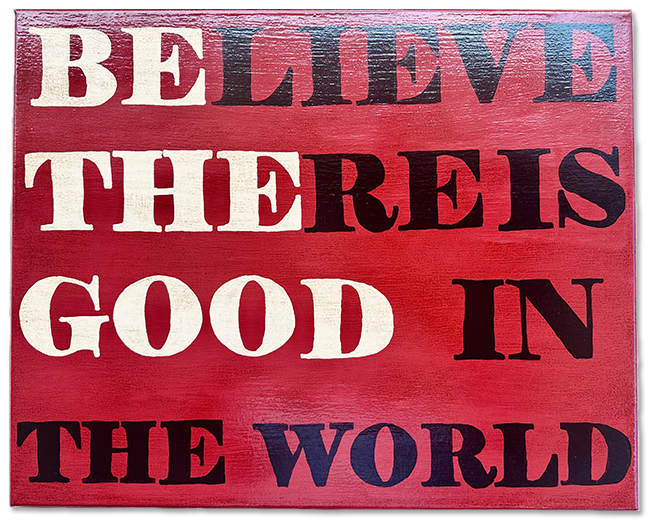 I don’t know where I first saw this quote, but I love it.
I painted it on a canvas. It’s not perfect but it’s a perfect reminder for me to find the good and to be the good as well. Dr. Hone says this, “Don’t lose what you have to what you have lost.” I find this very inspiring. It helps to not give present poor circumstances any more power in your life. You have the ability to notice the good and permission if you need it, to enjoy the good in your life. So, try, each day, to notice 3-5 good things that, even in the midst of your trials, you’re still thankful for.
Note: While practicing gratitude has many health benefits, it’s important to know that depending on your circumstance and where you are in processing grief and/or trauma, you may not yet be ready to begin a gratitude practice. Be gentle with yourself. You’ll know when you’re ready to begin.
Is This Helping or Hurting?
According to Dr. Hone, resilient people ask themselves if what they are doing is helping or hurting them to help navigate forward during tough times. It’s a great question. Like asking for directions, asking yourself this question and acting on the answer, provides actionable next steps. This strategy was new for me. Now, I use it guide my thinking and behavior. For example, I’ve shared I’ve been working on improving my sleep quality and quantity. (Read my blog on Brain Health.) This question helps me make better decisions about my sleep. It stops me from staying up late scrolling on my phone or watching another episode, two things that take me further away from my sleep goals. Or when my mind starts wandering and ruminating as I’m trying to fall asleep – definitely not helpful, this question prompts me to calm myself with deep breathing, and I usually do fall asleep after that. I’ve noticed that asking the question keeps me focused on what is happening in the present, allowing me to change the things I can.
For Joe, when his cancer spread, he said he didn’t want cancer to take over every part of his life. He committed to doing all he could each day concerning his treatment and recovery – scheduling appointments, calling our insurance company, getting his medications. Then he’d put it down and intentionally give his attention to other things. Joe is resilient for sure. He had to accept his reality in order to act on the things within his control. (Read Our Story.)
Dr. Hone shares in her powerful TED talk how she applied this question to her life during the hardest of times and offers examples for its use that everyone working to grow their resilient skills will find invaluable.
What Works for You?
I encourage you to try the strategies and see how they work for you. And if you’ve tried them, please share in the comments what worked for you.
Be well,Christine



Great blog on acceptance Chrissy! Love it! 😀👍
Thanks, Mike!
So many golden nuggets and critical reminders! Thank you! 🌸
You are welcome, Susanne! I’m glad to hear you found useful nuggets in the blog.